
Key takeaways
- The Wineglass Bay Lookout is a 2.6 km return walk that takes 1 to 1.5 hours and is graded Grade 3 by Parks Tasmania.
- A daily vehicle park pass costs $49.15 for up to 8 people, or $24.55 per person arriving on foot, cycle or bus (Parks Tasmania, 2026).
- Early morning and shoulder seasons give you the clearest view with the fewest people at the lookout platform.
- The lookout pairs naturally with Honeymoon Bay, local oysters and the wider east coast, best explored at your own pace.
- A single day works well, and a relaxed overnight lets you reach the Hazards before the day crowds arrive.
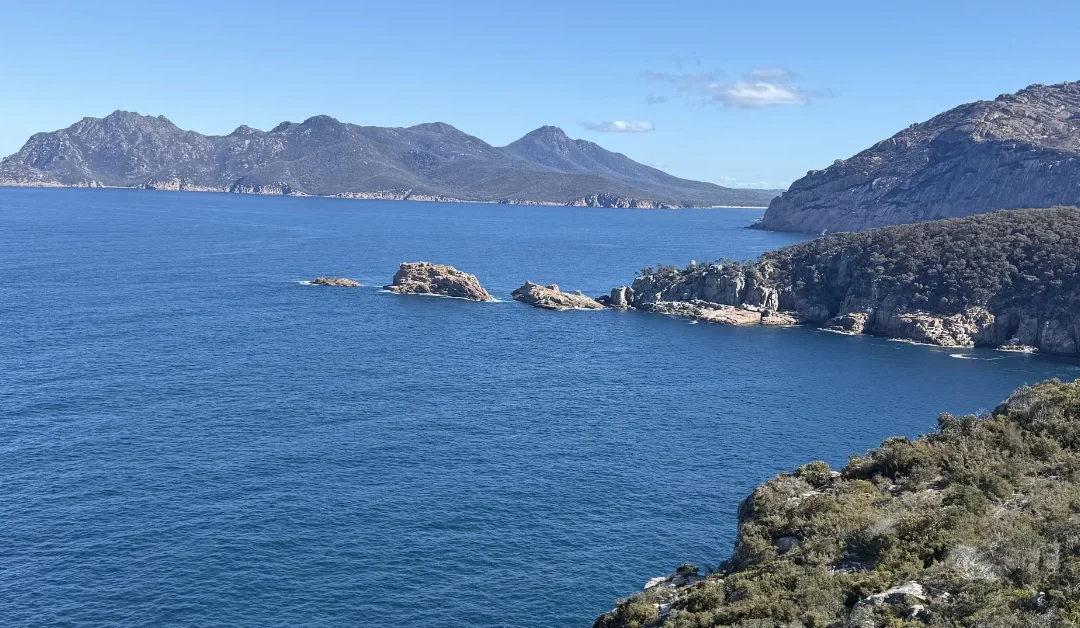
The Wineglass Bay Lookout is a 2.6 km return walk that takes 1 to 1.5 hours and rewards you with Tasmania's most photographed curve of white sand and blue water. You climb through coastal bushland and granite to a platform that frames the whole bay below the Hazards. This Freycinet walking guide covers how long the track really takes, when to go for the clearest view, and how to build the lookout into a slower, more personal day on the east coast.
What to expect on the Wineglass Bay Lookout track
The track runs 2.6 km return and takes most walkers 1 to 1.5 hours, graded Grade 3 by Parks Tasmania, which means steep pinches and many steps (Parks Tasmania, 2026). It is a steady uphill effort rather than a flat stroll, so plan for a short but honest climb.
From the main car park, the path rises through dry eucalypt forest before the granite takes over. Expect a surface of rough stone and well-worn steps. There is no official step count on the lookout route, so ignore the "1,000 steps" figure you may see elsewhere; that number belongs to the far longer descent down to the beach, not the climb to the lookout.
Wear proper shoes and carry water. Many first-time visitors assume the lookout and the beach are the same walk. They are not. The lookout gives you the famous view for a modest effort. Reaching the sand and returning is a much longer, steeper outing that adds real hours to your day.
A short note on crowds. Freycinet currently draws around 290,000 visitors a year, down from roughly 320,000 in 2019, with Parks Tasmania projecting about 343,000 by 2039 (Parks Tasmania Freycinet Visitor Gateway Project, 2026). That steady demand is exactly why timing matters.
When is the best time to visit the Wineglass Bay Lookout?
Early morning is the single best window. The air is cooler for the climb, the light falls softly across the bay, and the lookout platform is far quieter before the first coaches and day-trippers arrive. With visitor numbers near 290,000 a year, the difference between 8 am and midday on the platform is dramatic.
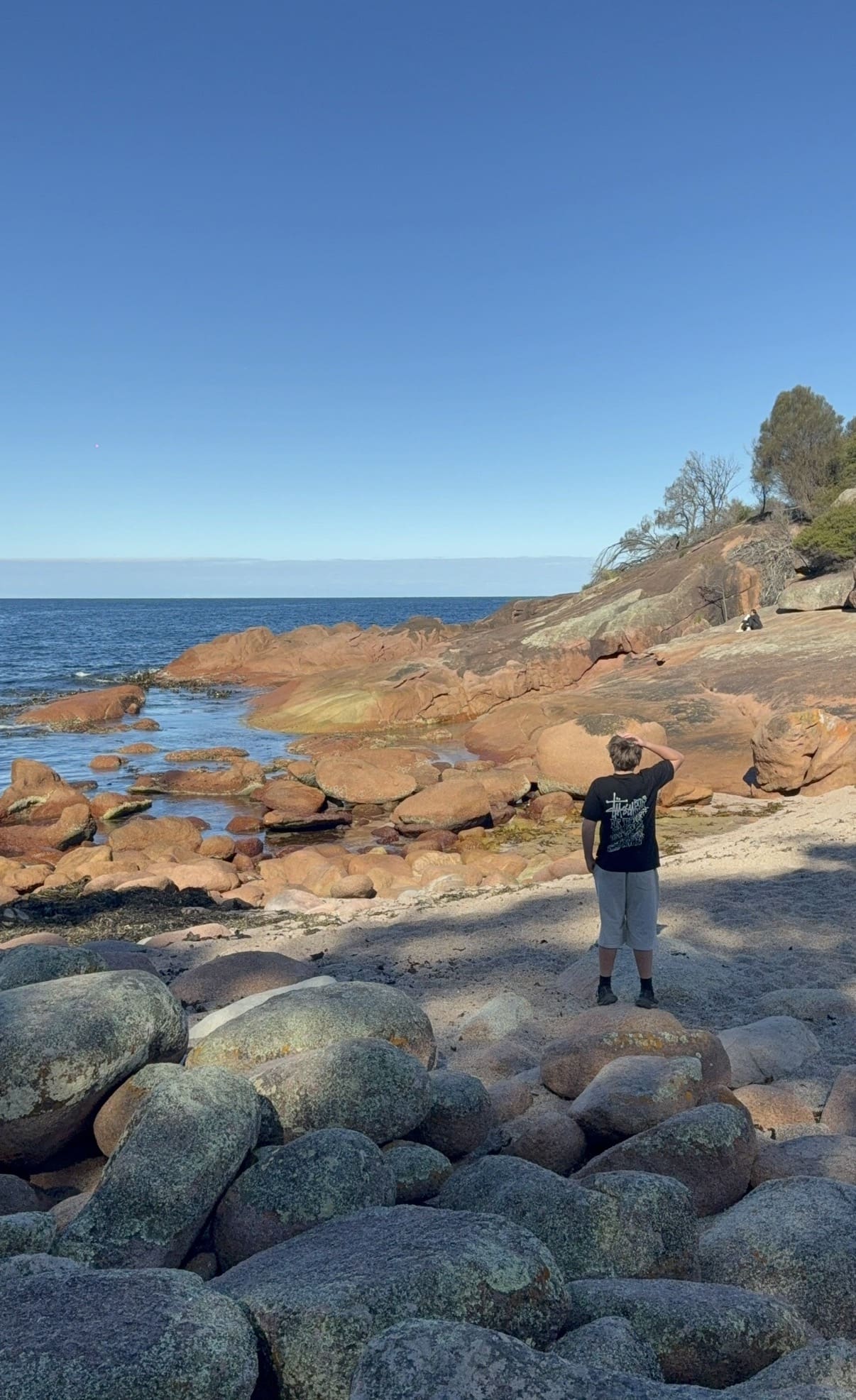
Season matters almost as much as the hour. Summer brings the warmest weather and the largest crowds. Spring and autumn are the quiet achievers: settled days, mild temperatures for the granite steps, and noticeably more room at the railing. Winter is clear and crisp on the right day, though showers can roll through quickly.
If you can only come in peak summer, aim for the first walk of the morning or the last light of the afternoon. The midday block is when the platform fills and parking tightens. A flexible plan lets you move with the weather rather than against it, which is where a private, small-group approach earns its keep.
How a private Freycinet visit lets you linger at the Hazards
A fixed coach schedule pushes you up and down the track on someone else's clock. A private, small-group visit does the opposite: you set the pace, you choose the hour, and you stay at the lookout as long as the light and the mood hold. That freedom is the whole point of touring the Hazards your way.
Adventure Trails Tasmania runs small, fully customised tours across southern Tasmania and the east coast, so a Freycinet day is shaped around you rather than a timetable. If the morning is clear, you go early for the quiet platform. If the afternoon turns golden, you linger. There is no rush back to a full bus.
Small groups also change what the climb feels like. You walk at a comfortable pace, pause where you want for photos, and actually talk with your guide about the granite, the vegetation and the bay. "Tasmania your way" means the itinerary bends to your interests, whether that is more time on the trail or more time by the water afterwards.
Pairing the lookout with Honeymoon Bay, oysters and the coast

The lookout is the headline, yet the surrounding coast is what turns a quick stop into a full day. Honeymoon Bay sits a short drive from the car park, a sheltered granite cove with calm water that suits an easy swim, a snorkel or simply a quiet picnic (Parks Tasmania, 2026).
From there, the east coast opens up. Freycinet is oyster country, and a plate of fresh local oysters near the water is one of the region's simple pleasures. Coles Bay, the long sweep of Friendly Beaches and the quiet corners around the Hazards all reward an unhurried loop once the main climb is behind you.
This is where a customised day pays off. Rather than a single lookout photo and a dash onward, you can thread the walk, a swim at Honeymoon Bay and a slow lunch into one relaxed rhythm. Adventure Trails Tasmania builds exactly this kind of flexible east coast day, so the lookout becomes the start of the experience rather than the whole of it.
Should you do a Freycinet day tour or stay overnight?
Both work, and the right choice depends on how much coast you want. A single day comfortably covers the Wineglass Bay Lookout, Honeymoon Bay and a coastal lunch, especially with an early start to beat the crowds. For many visitors, that is a complete and satisfying Freycinet experience.
An overnight stay changes the texture of the trip. You reach the Hazards early, before the day coaches, and you have time to add more of the east coast at a gentler pace: Freycinet's quieter beaches, a longer walk, or a detour toward Maria Island and the broader region. Parks Tasmania charges $49.15 for a daily vehicle pass (up to 8 people) or $24.55 per person for those arriving on foot, cycle or bus, so plan your entry accordingly (Parks Tasmania, 2026).
A single-day Freycinet tour suits a focused visit, however we believe it's a very rushed experience especially when guests are wanting to achieve some of the hikes and multiple short walking and attractions all in one day. while a relaxed overnight option, like the multi-day touring we offer, also runs on Bruny Island and across southern Tasmania, suits travellers who want to slow right down. Either way, the plan is private, small-group and customised to you.
To turn this guide into a real morning at the Hazards, decide your pace first: book an early arrival for the quiet platform, then shape the rest of the day around Honeymoon Bay and the coast. A small-group, customised Freycinet tour with Adventure Trails Tasmania is the simplest way to walk the lookout on your own clock and keep the whole east coast open to you.
Frequently asked questions
How long is the Wineglass Bay Lookout walk?
It is 2.6 km return and takes most people between 1 and 1.5 hours, including time at the lookout. Parks Tasmania grades it Grade 3, with steep sections and many granite steps.
Do I need to pay to enter Freycinet National Park?
Yes. A daily vehicle pass is $49.15 for up to 8 people, and a per-person daily pass is $24.55 for anyone arriving on foot, cycle or bus (Parks Tasmania, 2026).
What is the best time to visit Wineglass Bay Lookout?
Early morning gives you cooler air, softer light and far fewer people. Spring and autumn carry smaller crowds than the summer peak while still offering settled weather.
Can I see Wineglass Bay without walking to the beach?
Yes. The lookout gives you the classic crescent view without the long, steep descent to the sand. The beach walk is a separate, much longer extension beyond the lookout.
Is one day enough for Freycinet, or should I stay overnight?
A day visit covers the lookout and nearby bays comfortably. An overnight stay lets you reach the Hazards early, linger longer, and add more of the east coast at a slower pace.