
Key takeaways
- A Tasmania east coast road trip links Freycinet, Maria Island and the Tasman Peninsula into one coherent coastal loop.
- Allow four to five days so each stop gets real time instead of a rushed drive-through.
- Maria Island has no vehicle access, so plan a day on foot or by bike with the 45-minute ferry from Triabunna.
- Wineglass Bay sits about 195km and a 2.5-hour drive northeast of Hobart.
- Overnight stays let you reach beaches and lookouts in the soft light before and after the day-tripper crowds.
A Tasmania east coast road trip strings together three of the state's finest coastal landscapes: Freycinet National Park, Maria Island and the Tasman Peninsula. Give it four to five days, build in at least one overnight stay, and you trade a tiring highway dash for slow mornings on empty beaches and late-afternoon light on pink granite.
This guide covers how the three areas connect, the stops worth your time along the way, how many days the coast really needs, why overnight stays change the trip, and how a small-group private journey can be shaped around what you actually want to see.
Planning a Tasmania east coast road trip: linking Freycinet, Maria Island and the Tasman Peninsula
The east coast works as a loop. From Hobart you can head north up the coast to Freycinet, drop back to Triabunna for Maria Island, then swing south to the Tasman Peninsula before returning to the city. Each leg is short enough to leave real time at the destination rather than behind the wheel.
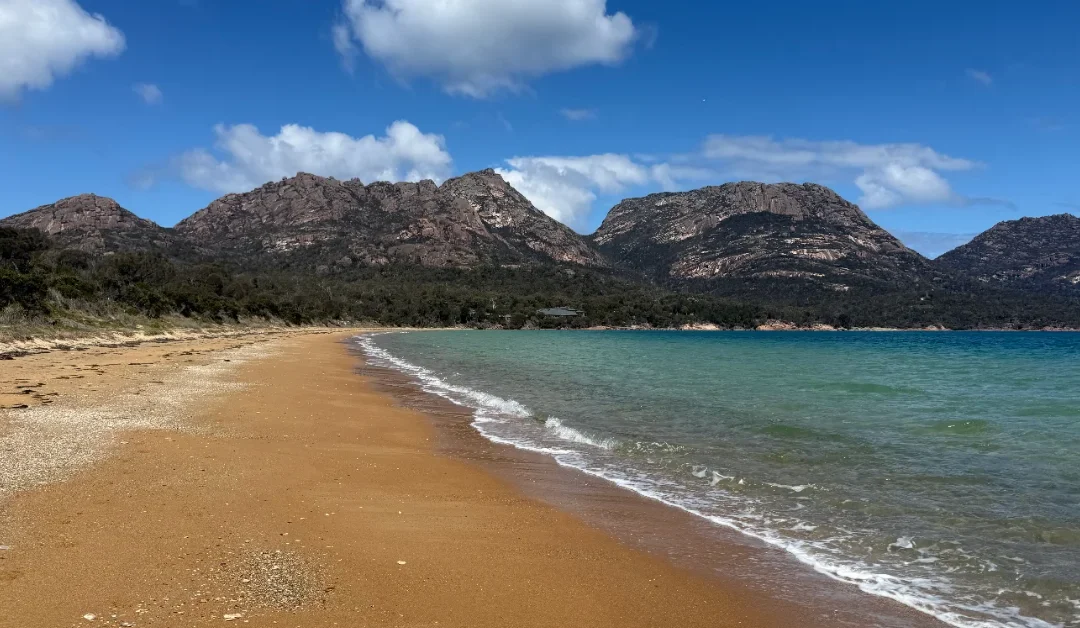
Freycinet is the anchor in the north. According to Discover Tasmania, the park sits about 195km and a 2.5-hour drive northeast of Hobart, and its Wineglass Bay was ranked number 21 in the World's 50 Best Beaches for 2026. The drive itself is part of the appeal, with quiet bays and small coastal towns breaking up the route.
Maria Island sits offshore from Triabunna, roughly between Freycinet and Hobart, which makes it an easy addition rather than a detour. The Tasman Peninsula, south of Hobart, closes the loop with its sea cliffs and the historic Port Arthur site. Together the three give you beaches, an island wildlife sanctuary and dramatic coastal geology in one trip.

Scenic stops, beaches and wildlife along the way
The east coast rewards travellers who stop often. The headline sights are worth the hype, but the smaller pauses between them are where the trip breathes.
Freycinet gives you the Wineglass Bay lookout, the beach walk down to the sand, and the broader Hazards range. Honeymoon Bay and Sleepy Bay reward a short detour for calm water and photogenic rock. Expect to share the main lookout with other visitors in the middle of the day, which is one reason timing matters.
Maria Island is the wildlife highlight. The Tasmania Parks and Wildlife Service notes that the island has no vehicle access, so you explore on foot or by bike, and that 11 of Tasmania's 12 endemic bird species can be found there. Fifteen Tasmanian devils were introduced to the island in 2012 as a disease-free insurance population. Wombats, Cape Barren geese and forester kangaroos are common sights on the open grasslands near the old Darlington settlement.
The Tasman Peninsula brings the coast's most dramatic geology. The Parks and Wildlife Service describes the Tasman National Park as home to Australia's highest sea cliffs, with dolerite columns rising to capes such as Pillar, Hauy and Raoul. Short walks to Waterfall Bay, the Tessellated Pavement and the clifftop lookouts put the scale of the coastline in front of you without a full-day hike.
Season shapes what you see. Spring and early summer bring wildflowers and nesting seabirds, while autumn often delivers the calmest water and clearest light for the lookouts. Whales pass along the coast on their migration, and even a short pause at a headland can turn up dolphins or a sea eagle. An east coast Tasmania tour built around these rhythms tends to hold wildlife time loosely, because the best sightings rarely keep to a timetable.
How many days you need to enjoy the coast unrushed
Four to five days is the sweet spot for the east coast. That gives roughly a full day at Freycinet, a full day on Maria Island, a day on the Tasman Peninsula, and enough driving time between them to stop where you want rather than where the clock allows.
A three-day version is possible, but it forces hard choices. You might see Freycinet and the Tasman Peninsula well and reduce Maria Island to a quick visit, or skip the island entirely. The ferry schedule and the car-free nature of Maria Island mean it does not compress neatly into a half-day.
If you have a week, the coast opens up further. You can add quieter northern beaches, walk a longer section of the Freycinet Peninsula, or simply build in a rest day. The point of the extra time is not to add more stops. It is to let the stops you have chosen slow down.

Why overnight stays make the east coast sing
The east coast changes character outside the middle of the day. Early morning and late afternoon bring soft light, calmer water and far fewer people at the lookouts. Overnight stays are what let you be there at those hours. Ask us about the spectacular and comfortable suggested accommodation, yes in great handy locations.
Day trips from Hobart to Freycinet and back burn most of the daylight on the road, since each direction is a 2.5-hour drive. Staying near the park means you can reach the Wineglass Bay lookout before the first tour buses, or walk a beach in the evening with the Hazards glowing. Maria Island works the same way: an overnight at nearby Triabunna lets you catch an early ferry and have the island's grasslands largely to yourself.
Overnight stays also reduce the quiet strain of long daily drives. Instead of covering the same ground twice, you move steadily along the coast and wake up closer to the next morning's first stop. The trip feels less like a schedule and more like a journey.
Designing a fully customised small-group coastal journey
A self-drive trip is one way to see the east coast. A private, small-group tour is another, and it suits travellers who would rather watch the coast than the road. This is where Adventure Trails Tasmania fits: small groups, a local guide, and an itinerary shaped around what you want rather than a fixed route.
Customised touring matters most on a coast with this much variety. One group might want long walks in Freycinet and a slow wildlife day on Maria Island. Another might prioritise the Tasman Peninsula's cliffs and Port Arthur's history, with beach time in between. A fully customised plan lets the trip lean into either, and lets the pace stretch where a place deserves it.
Overnight and multi-day options are part of this too. Rather than a single long day out and back, Adventure Trails Tasmania can build in stays along the coast so you reach the best lookouts in the best light. Tasmania your way means choosing not just where you go, but how slowly, and that is exactly what the east coast rewards.
Small groups help here as well. With only a handful of travellers, the day can flex around how a place is feeling: a longer stop when the light is good, an earlier start when the ferry or the tide calls for it, a quiet detour to a beach the buses skip. Many Tasmania east coast tours run to a fixed script, and a private trip trades that predictability for the freedom to follow the coast on its own terms.
Start by deciding your two non-negotiable experiences along the coast, whether that is the Wineglass Bay walk, a day on car-free Maria Island, or the Tasman cliffs. Build the rest of the journey, and your overnight stays, around those, and the east coast will give you far more than a drive-through ever could.
Frequently asked questions
How many days do you need for a Tasmania east coast road trip?
Four to five days is a comfortable pace to link Freycinet, Maria Island and the Tasman Peninsula without rushing. Three days is possible but tight, and a week lets you add quieter beaches and longer walks.
Can you drive onto Maria Island?
No. Maria Island has no vehicle access. You reach it on a 45-minute ferry from Triabunna and explore on foot or by bike, which is why it feels so calm and wildlife-rich.
How far is Wineglass Bay from Hobart?
Freycinet National Park, home to Wineglass Bay, is roughly 195km and about a 2.5-hour drive northeast of Hobart along the east coast.
Is it worth staying overnight on the east coast?
Yes. Overnight stays put you at the lookouts and beaches in early morning and late afternoon light, before day-trippers arrive and after they leave, and they cut long daily drives.
Can the east coast be done as a private small-group tour?
Yes. A fully customised small-group trip lets you set the pace, choose which walks and beaches matter to you, and add overnight stays where the coast rewards an unhurried visit.